


What is the difference between the performance of industrial cloth at different temperatures?
There are significant differences in the performance of industrial cloth at different temperatures, which are mainly manifested in the following aspects:
Temperature resistance: The temperature resistance of industrial cloth is a key difference factor. The industrial cloth of different materials has its own temperature -resistant range. For example, the conventional working temperature of polyester filter cloth is about 120 ° C, and it will soften more than 238 ° C, and it will dissolve over 255 ° C. ° C will dissolve. Nylon and Vellen filter cloth also have their own temperature -resistant range. Therefore, it is essential to choose an industrial cloth suitable for working temperature.
Mechanical performance: At low temperature conditions (below -40 ° C), the flexibility and impact resistance of the glass fiber cloth are better, but the mechanical strength will be affected. Under medium temperature conditions (-40 ° C ~ 200 ° C), the mechanical properties and abrasion resistance of the glass fiber cloth are good, and it is an ideal material for ordinary industrial applications. However, at high temperature conditions (above 200 ° C), the mechanical performance and wear resistance of the glass fiber cloth will decrease sharply. After heating, it is easy to loose and crispy. It is prone to aging and deterioration in high temperature environments for a long time.
Heat stability: Shining or deformation may occur at high temperatures at high temperatures, affecting its size stability and performance. There are differences in thermal stability of industrial cloths of different materials. For example, the cotton industry cloth is easy to shrink at high temperatures, while the industrial cloth of synthetic fibers such as polyester and proparths has good thermal stability.
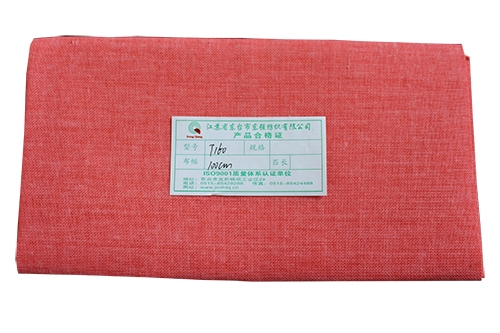
INDISTRIAL Cloth
Chemical stability: The chemical stability of industrial cloth at different temperatures is also different. High temperature may accelerate chemical reactions and cause industrial cloth to be affected by corrosion or discoloration. Therefore, choosing an industrial cloth with good chemical stability is essential to prevent chemical reactions in high temperature environments.
Insulation performance: Under high or low temperature conditions, the insulation performance of industrial cloth will also change. For example, high temperature will cause the insulation performance of the fabric to decrease and increase the risk of conductivity. Therefore, when choosing industrial cloth, it is necessary to consider whether the insulation performance of the work temperature meets the safety requirements.
In summary, there is a significant difference in performance of industrial cloth at different temperatures, which are mainly manifested in temperature resistance, mechanical performance, thermal stability, chemical stability, and insulation performance. In order to ensure that the performance of the industrial cloth at different temperature meets the requirements, it is necessary to choose the appropriate materials and processes according to the specific use environment and requirements, and perform corresponding testing and verification. At the same time, it is also necessary to pay attention to maintenance and maintenance during use, and regularly check and replace it to ensure that it always maintains a good working state.


