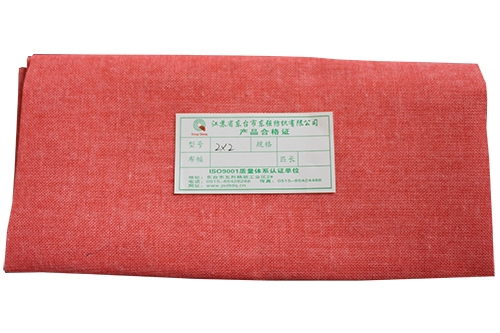
How many common thickness of industrial cloth is there? Industrial cloth manufacturer
As an indispensable material in industrial production, the choice of thickness has an important impact on the performance, quality and application field of the product. The following is a detailed analysis and induction of common thickness of industrial cloth:
1. Classification and scope of industrial cloth thickness
The thickness of the industrial cloth is different due to the different materials, uses and manufacturing processes. Generally speaking, the thickness of industrial cloth can range from several millimeters to a few centimeters. Here are several common thickness classifications:
Thin industrial cloth: thickness between 0.1 and 0.8 mm is usually between 0.1 and 0.8 mm. This type of industrial cloth is suitable for application scenarios that have high requirements for softness and lightness, such as dustproof cloth and waterproof canvas bags.
Medium -sized industrial cloth: thickness between 0.8 and 2 mm. This type of industrial cloth not only maintains a certain degree of softness, but also has good strength and durability. It is suitable for a variety of application scenarios, such as low -end tents, basic guardrails, and shading sails.
Thick industrial cloth: thickness is greater than 2 mm. Such industrial cloths usually have high strength and durability, and are suitable for application scenarios that need to withstand large pressure and wear, such as ship canvas, large tents, vibration sieves, etc.
2. Specific thickness value and application scenarios
0.5 to 0.8 mm: This thickness industrial cloth is often used to make waterproof canvas bags, dust bags, leather bags, etc. Because it is thin and soft and easy to carry and use, it is widely used in outdoor equipment, logistics packaging and other fields.
0.8 to 1 mm: The industrial cloth of this thickness is suitable for making low -end tents, basic guardrails, shading sails, etc. Such products do not require high strength, but require certain durability and waterproof performance.
Industrial cloth
1 to 1.5 mm: This thickness of industrial cloth is often used to make tents, windproof walls, guardrails, car trunk seals, etc. These products have high requirements for strength, durability and waterproof performance, so they need to use thicker industrial cloth to ensure product quality.
1.5 to 2 mm: The industrial cloth of this thickness is suitable for making ship canvas, large tents, and vibration sieve nets. These products need to be used for a long time in harsh environments, so they need to use thicker industrial cloths to ensure the stability and safety of the product.
Third, the importance of thickness selection
Choosing the appropriate industrial cloth thickness has an important impact on the performance, quality and application field of the product. Excessive industrial cloth may not meet the strength and durability requirements of the product, while too thick industrial cloth may increase the weight and cost of the product. Therefore, when choosing industrial cloth, it is necessary to determine the appropriate thickness according to the specific needs of the product and the environment.
Fourth, summary
There are many types of thickness in industrial cloth, ranging from thin to thick. Each thickness industrial cloth has its specific application scenarios and performance requirements. When choosing industrial cloth, you need to determine the appropriate thickness according to the specific needs of the product and the environment of the use environment to ensure the performance, quality and adaptability of the application field. At the same time, with the continuous development and innovation of technology, the thickness and performance of industrial cloth will continue to be improved and improved, providing more quality support for industrial production.